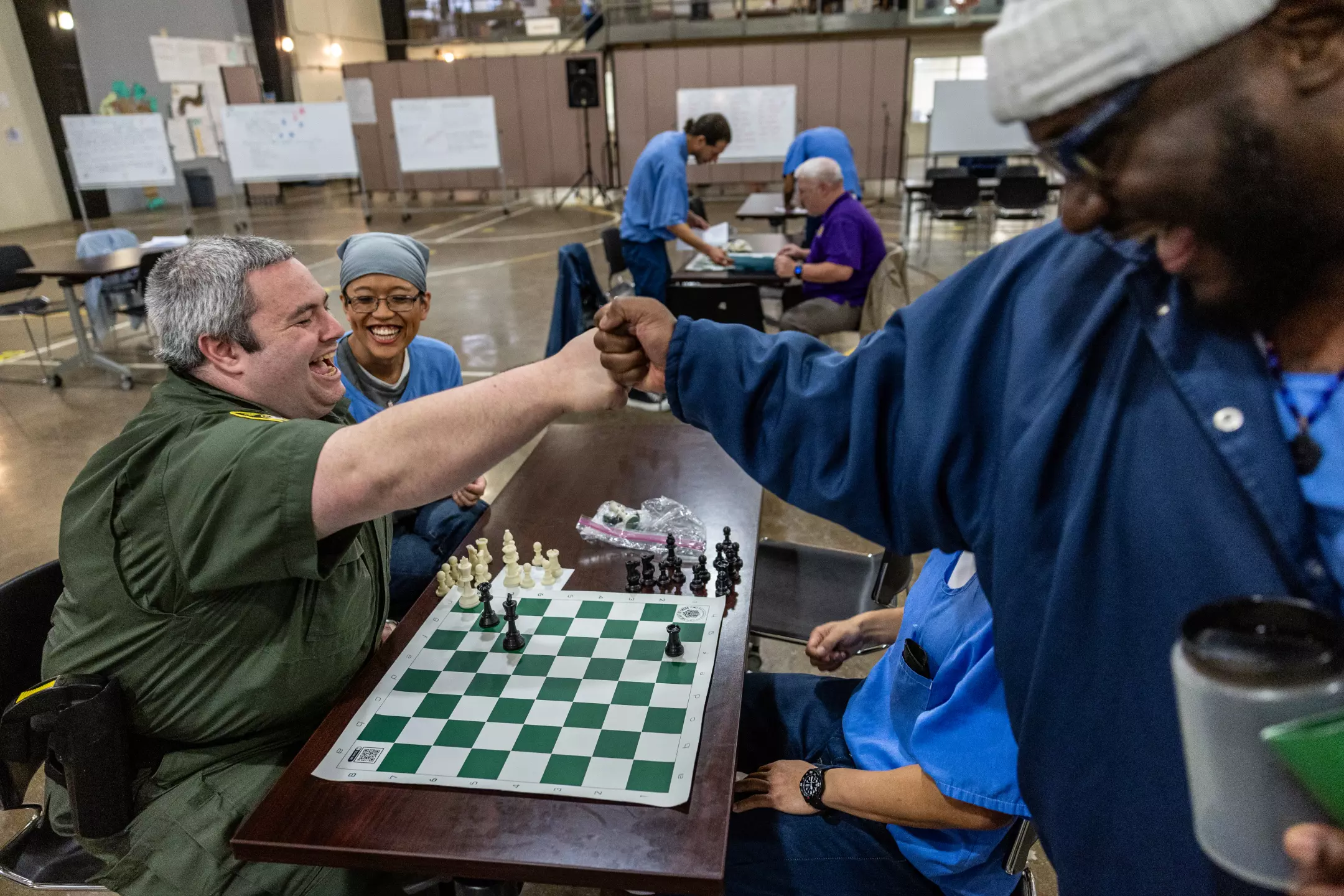
For years, the culture inside correctional facilities was defined by control, command, and degradation. Now, at California’s oldest and most infamous state prison, San Quentin, a new model is being pioneered—and it’s all about the small, profound shifts in human interaction.
As California moves to implement the California Model, inspired by the low-recidivism Scandinavian system, the goal is clear: to replace a culture built on hierarchy and fear with opportunities for connection and normalized social interactions.
This transformation begins with simple acts of humanity: Guards now call prisoners “residents” and basic necessities, like a replenished toilet paper locker, are provided without being begged for. These acts restore the dignity that is stripped away by incarceration, providing the essential psychological foundation upon which rehabilitation can be built.
From Warfare to Winning: The Power of Structured Play
The article makes clear that this cultural transformation is not easy. It relies on a “dramatic shift in relations among officers and prisoners, two historically warring factions.” Change requires vulnerability, which is deeply resisted in a culture built on survival.
This is precisely where The Koinonia’s mission becomes an essential, practical tool.
The San Quentin experiment found a key catalyst for this cultural shift: games. The article highlights an organized chess tournament between staff and residents, and the presence of kickball and flag football. These activities are powerful because they provide a neutral, structured environment to practice collaboration.
Officer Richard Kruse, one of the few enthusiastic supporters of the California Model, took this concept further in his unit. He brought in his own money and games—including Uno, Just One, and Tsuro—to a repurposed room. His goal: to use the interaction around friendly competition to model “pro-social behavior.”
This is the very heart of The Koinonia’s value:
- It’s a Safe Training Ground: Games create a space where, as inmate Jessie Milo said, the fighting must stop. The rivalry is confined to the board, allowing men to practice negotiation and managing frustration. The chess match allowed Milo to trade banter with Officer Kruse, building a bridge of shared experience.
- It Rebuilds Lost Skills: The men who will eventually leave San Quentin and mix with the general population—some after decades of isolation—must reacclimate to human interaction. As convicted serial killer Wayne Adam Ford noted, the socialization sessions helped him “reacclimate to other humans.” Our strategy and social games teach the active listening, patience, and strategic foresight necessary to succeed outside the walls.
The Long Game: Investment in Our Neighbors
The California Model is not a “grand gesture,” as resident Jessie Milo points out; “The California Model is just kindness, courtesy and normalcy.”
But embedding this new culture requires more than just kindness—it requires tools that reinforce pro-social habits. That’s where The Koinonia comes in. We equip correctional facilities with the specific, compliant, and purpose-driven games that allow residents to practice being good neighbors, teammates, and citizens.
As Officer Kruse wisely concluded: “They’re gonna leave someday…. Those guys, if I can work with [them] to make [them] better, that, to me, is what it’s about.”
By donating to The Koinonia, you are funding the “pebbles down a mountain” that will create systemic change. You are supporting the crucial, everyday interactions that turn a culture of punishment into one of preparation.
Donate today to replace isolation with connection. Help an incarcerated person plan for a new future. Your gift supports programs that teach vital life skills and reduce recidivism.
 using WordPress and
No responses yet